Help me choose
Timing a Merch Drop Around Your Season
Where a merch drop fits best across preseason, in-season, and postseason, and how to avoid opening at the worst possible moment.
By Influxer · Published 2026-08-16 · Updated 2026-08-16 · 4 min read
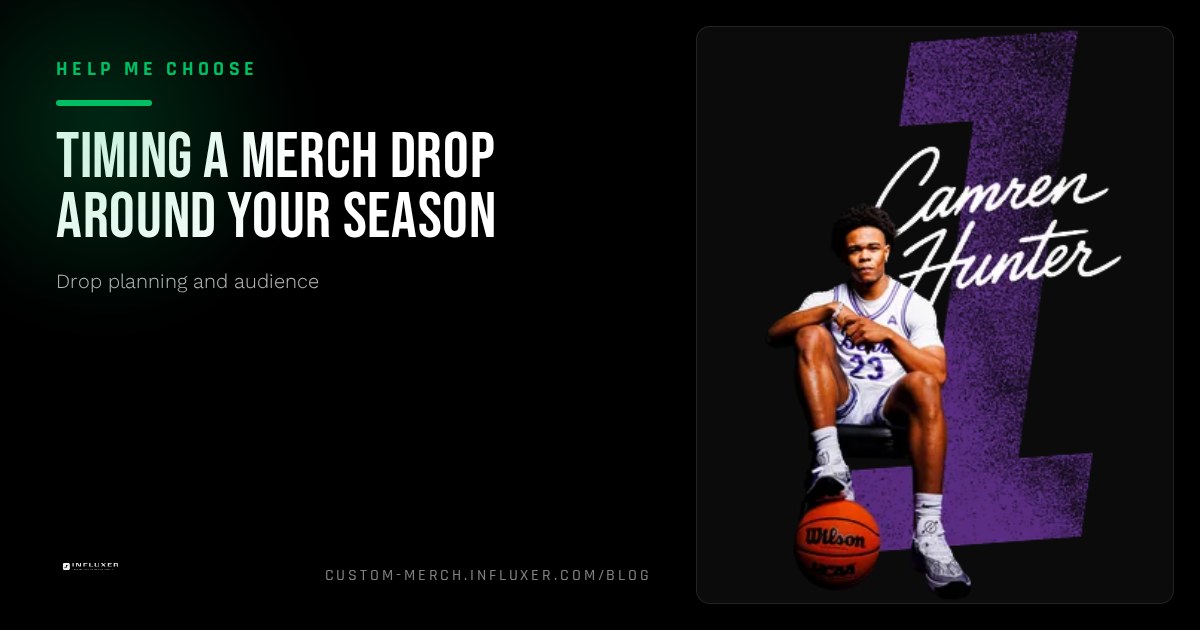
The same design can perform very differently depending on when it opens. A drop that lines up with a moment people already care about gets carried by that attention. A drop dropped into a random week with nothing happening around it has to create all of its own attention from scratch.
Timing is not about finding one perfect date. It is about understanding what each part of a season is good for, and choosing the window that matches what you are trying to accomplish with this particular drop.
This walks through the three broad windows in any athletic calendar — preseason, in-season, and postseason — and what each one tends to be good and bad for.
Preseason: build anticipation, do not oversell
Preseason has energy but not yet results. It is a strong window for teasing a design and building anticipation, since people are already thinking about the season ahead and looking for something to be excited about.
The risk in preseason is opening orders too early, before there is any real momentum behind you. A design tied purely to optimism can feel thin if nothing has happened yet to back it up. Consider opening a small version of the drop here and saving a larger collection for once the season is underway.
In-season: ride the attention that already exists
In-season is usually the strongest window because attention is already high and does not need to be manufactured. People are watching games, following results, and more likely to notice something new tied to a season in progress.
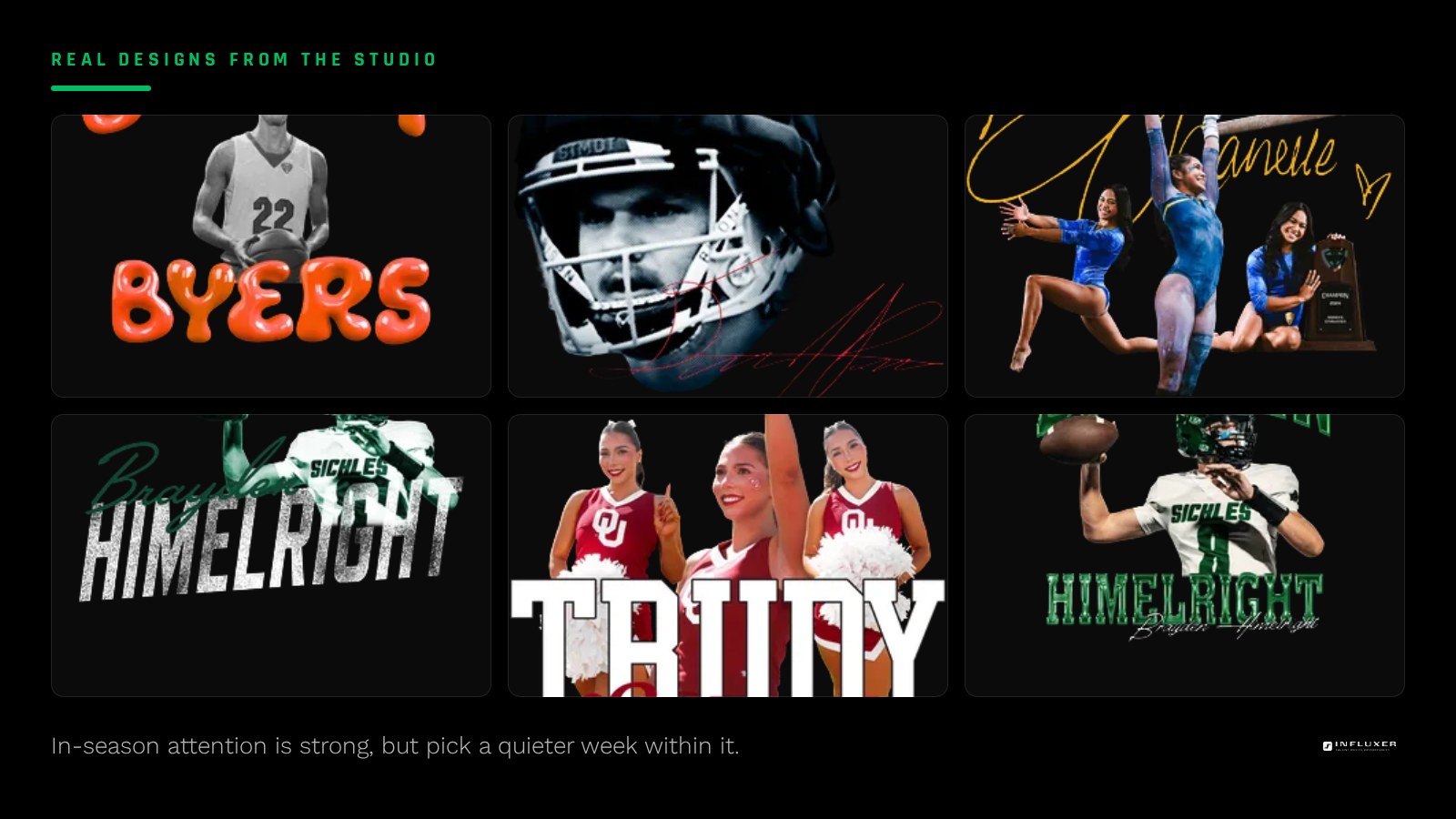
The tradeoff is competition for attention: your merch is one more thing in a schedule already full of game days, travel, and other commitments. Pick a quieter stretch within the season, like a week without a major event, rather than a day when everyone is focused on a single game.
Around a specific milestone
Milestones give a drop a built-in reason to exist: a senior night, a specific game people already have circled, or a personal moment worth marking. These dates create urgency and context without you having to invent either.
The design itself should tie to the milestone in some way, even loosely, so the connection is obvious to anyone seeing it. A drop with no connection to the moment it is timed around loses some of that built-in reason to pay attention.
Postseason and offseason: room to plan, less urgency
Once a season ends, attention naturally cools, but this window has real advantages: more time to plan, less competition from game-day content, and a natural moment to reflect on the season that just happened.
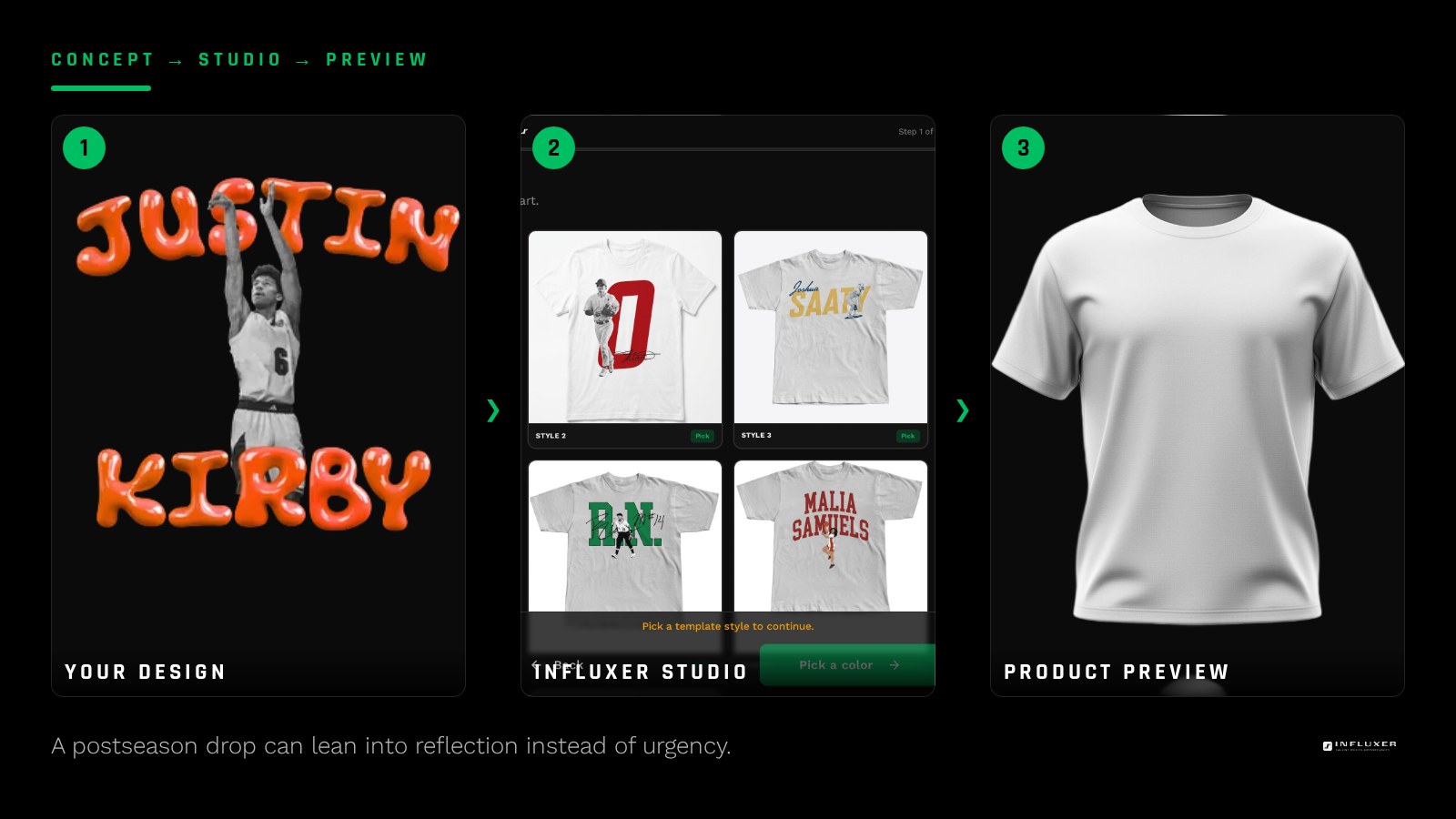
A postseason drop works best when it leans into that reflection rather than pretending urgency it does not have. A design that marks the season that just wrapped, rather than one trying to manufacture hype for no clear reason, tends to feel more honest here.
Avoid opening against something bigger
A drop opened the same day as a major game, a tournament, or another significant event on your calendar has to compete with that event for attention, and it will usually lose. People are focused on the thing that already has their attention, not on checking a new store page.
Look at your own schedule a few weeks out and pick a date without a major competing event nearby. A quieter week gets your drop more genuine attention than a packed one, even if the packed week feels like it should be exciting.
Give yourself a real runway, not a rushed one
Whatever window you choose, work backward from the date you want to open orders and make sure design, photos, and promotion all have enough time before it. A drop timed well but planned in three days ends up looking rushed regardless of the calendar reason behind it.
A realistic minimum is one to two weeks between finishing the design and opening orders, which leaves room for photos, a short promotional sequence, and any adjustments the review process asks for.
Choosing your window
- Decide whether this drop is tied to preseason anticipation, in-season momentum, a milestone, or a postseason reflection.
- Check your schedule a few weeks out for any major competing event and avoid opening against it.
- Give yourself at least one to two weeks between finishing the design and opening orders.
- Match the size of the drop to the window: smaller for preseason, larger once momentum is real.
- If timing around a milestone, make sure the design itself connects to that moment.
- Plan your promotion sequence to fit inside the runway you actually have.
Frequently asked questions
Is in-season always the best time to open a merch drop?
It is usually the strongest window because attention is already high, but it also means competing with games and other commitments. A quieter stretch within the season tends to work better than a day with a major event happening.
Should I open a drop before the season even starts?
Preseason can work well for building anticipation, but consider keeping that drop smaller. Momentum is usually stronger once the season is actually underway.
How much lead time do I need before opening orders?
A realistic minimum is one to two weeks after the design is finished, which leaves room for photos, a short promotional sequence, and the review step.
What if my only available date conflicts with a big event?
Look for the nearest quieter date instead, even if it is a few days off from your original plan. Opening against a major competing event usually costs you more attention than a short delay would.
Start planning your timing — Map your design and order window before you commit to a date.
Watch the studio walkthrough — See how long each studio step actually takes.