Help me choose
Merch Photo and Content Ideas You Can Shoot in an Hour
A short, realistic list of photos and content you can capture in about an hour, with nothing more than a phone and good light.
By Influxer · Published 2026-08-16 · Updated 2026-08-16 · 4 min read
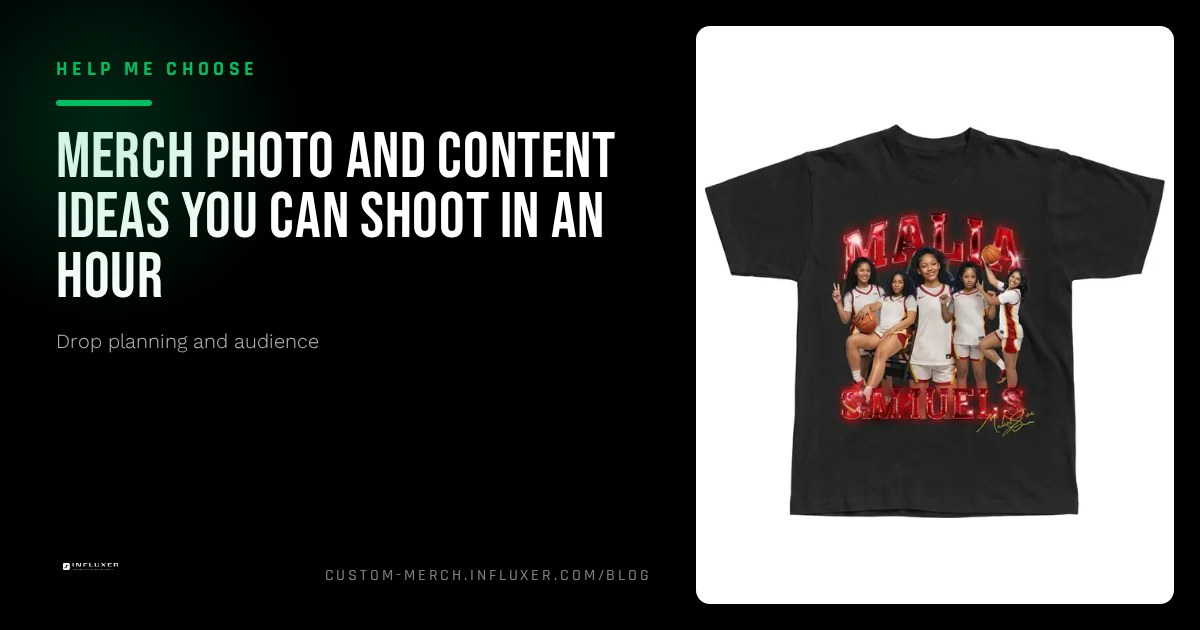
Most athletes overestimate how much photo work a merch drop needs and underestimate how much a handful of simple shots actually help. You do not need a photographer, a studio, or a full afternoon. You need about an hour, a phone, and a short list of exactly what to shoot.
The goal is not perfection. It is having enough real content that your store page and social posts show the actual product on an actual person, instead of relying entirely on a digital mockup.
This is a shot list built to fit inside an hour, split between what your store page needs and what works for social posts around the drop.
Start with light, not equipment
The single biggest factor in how a phone photo looks is light, not the camera. Shoot near a window with soft daylight, or outdoors on an overcast day or in open shade. Direct midday sun creates harsh shadows that a phone camera struggles with, so avoid it if you can pick your time.
If you only get one thing right before shooting, get the light right. A cheap phone in good light beats an expensive camera in bad light every time.
The three shots your store page needs
A store page does not need dozens of photos. It needs a small set that answers the real questions a visitor has about the product.
- A clean, front-facing shot of the garment worn, in good light, showing the full design placement.
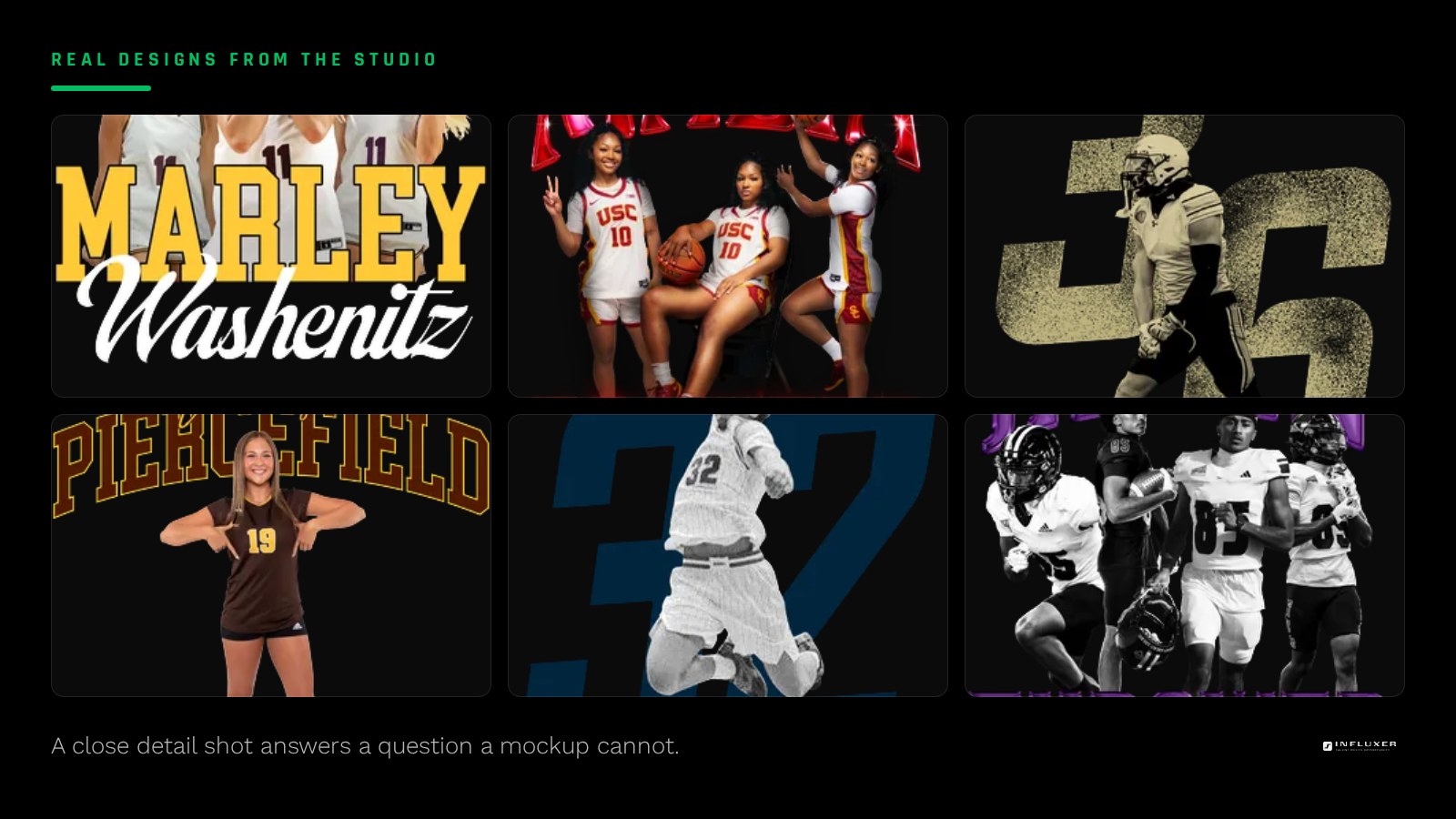
- A closer detail shot of the print itself, showing texture and clarity up close.
- A shot showing the back or a second angle if the design has anything there worth seeing.
Candid shots do more than posed ones
A posed studio-style shot looks fine, but a candid shot in a real setting tends to get more attention on social because it looks like something actually happening rather than a product photo. Practice, a car, a hallway, wherever you actually spend time works better than a blank wall.
You do not need to fake candid either. Have someone else hold the phone while you go about something normal wearing the shirt, and pick the frame that looks most natural afterward.
Get one shot with someone else in it
A photo of a teammate, sibling, or friend wearing the design alongside you signals that this is something other people are genuinely wearing, not just something you made for yourself. It is also a small, low-effort way to widen who feels invited to be part of the drop.
This does not need to be elaborate. Two people standing together in the same light you already set up covers it.
Capture the design process, briefly
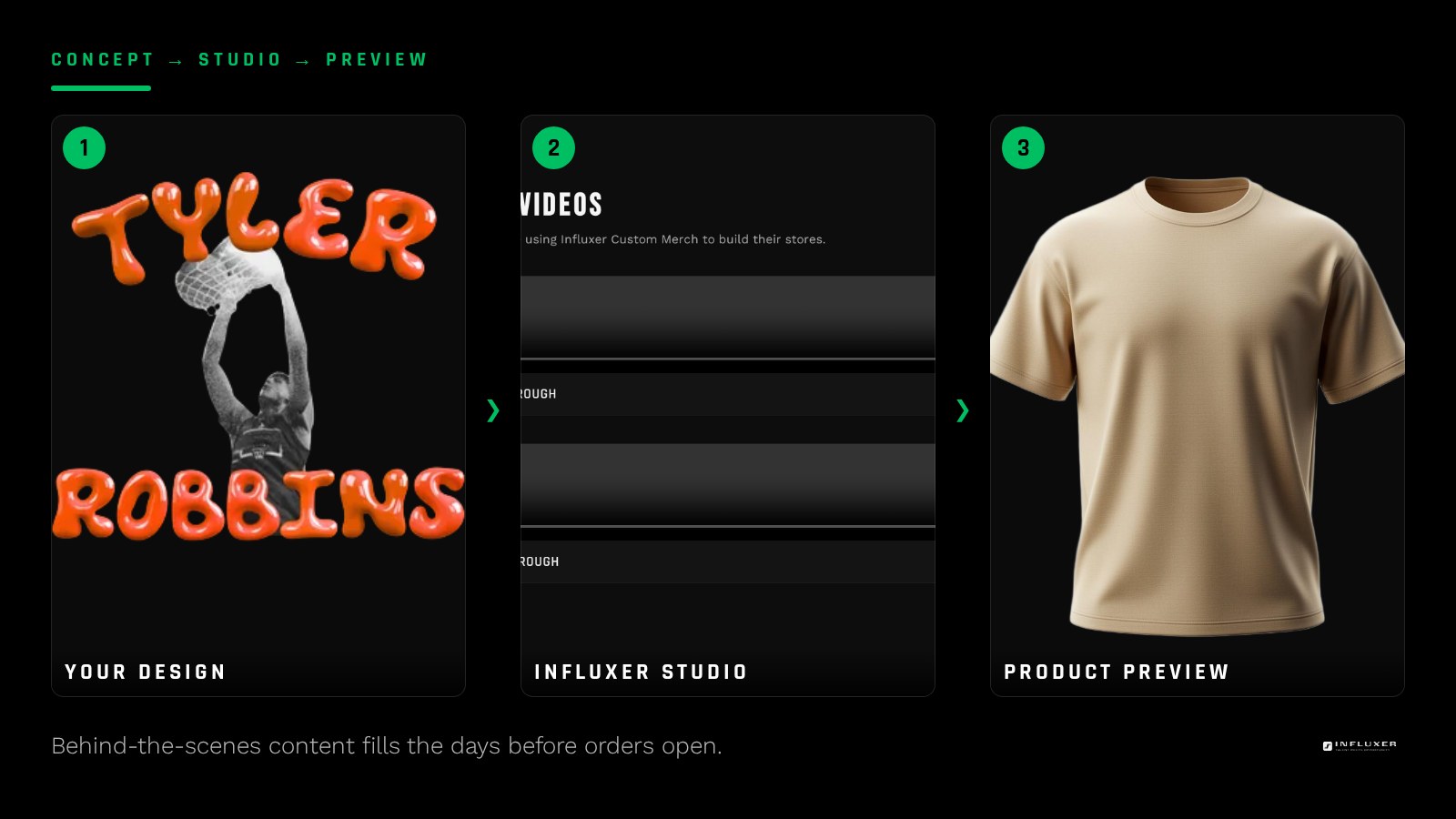
A short clip or photo of the design being placed on the garment mockup in the studio, or a quick shot of the original artwork before it became a shirt, gives people context for the finished product. It also fills content gaps in the days leading up to opening orders without needing new photos every time.
This kind of behind-the-scenes content works because it shows effort and intention, which makes the finished product feel earned rather than arbitrary.
Plan the order you shoot, not just the shots
To actually fit this inside an hour, do the posed and detail shots first while everyone is fresh, then move to candid shots once people relax and stop paying attention to the camera. Trying to force a candid feel first usually produces stiffer photos than doing it the other way around.
Batch the shots that need the same light and setup together, then move locations only once, if at all. Moving locations repeatedly is the most common reason a quick shoot runs long.
Do not wait for the perfect shoot
A short, imperfect shoot you actually complete beats an ambitious one that keeps getting postponed. If you are down to the wire before opening orders, do the front-facing shot and the detail shot and treat everything else as a bonus you can add later.
The studio mockup from the Influxer design step already gives you a clean digital reference, so real photos are there to add authenticity on top of it, not to replace it entirely.
Your one-hour shot list
- Pick a time with soft natural light: near a window, an overcast day, or open shade.
- Shoot one clean front-facing photo of the full design.
- Shoot one close detail shot of the print itself.
- Get one candid shot in a real, everyday setting.
- Include a second person wearing the design in at least one photo.
- Grab a quick behind-the-scenes shot of the design or artwork process.
- Shoot posed photos first, candid photos last, in one location if possible.
Frequently asked questions
Do I need a real camera for merch photos?
No. A modern phone camera in good natural light is enough for a store page and social posts. Light matters far more than the camera itself.
How many photos do I actually need before opening orders?
Three or four solid shots cover most drops: a front-facing shot, a detail shot, and one candid or group shot. More is fine, but it is not required.
What if I only have fifteen minutes, not an hour?
Prioritize the front-facing shot and the detail shot in good light. Those two cover the most important gap between a mockup-only page and one with real photos.
Should I edit or filter the photos before posting them?
Light adjustments to brightness or color are fine, but avoid heavy filters that distort the actual garment color, since a visitor is relying on the photo to judge what they will receive.
Start your design — Get a garment mockup ready before you plan your photo shoot.
Watch the studio walkthrough — See what the design mockup looks like before you shoot real photos.