Help me choose
Merch Planning for a Full Season
A single merch drop is easy to plan. A full season takes a different approach. Here is how to space drops out and keep them consistent.
By Influxer · Published 2026-08-16 · Updated 2026-08-16 · 5 min read
Planning one merch drop is a single decision tree. Planning across a full season means thinking about timing, variety, and consistency over several separate orders, which is a different exercise entirely. Get it right and each drop builds on the last. Get it wrong and you end up with a scattered set of items that do not feel like they belong together.
This is not about ordering everything at once. It is about sequencing decisions so that early drops set up later ones, and so you are not re-deciding your entire approach every single time.
Start by mapping your season's natural moments
A season usually has a few natural points where merch makes sense: the start of the season, a mid-season stretch, and an end-of-season or senior moment. Each of these calls for a different tone. An opening drop can be simple and everyday; an end-of-season drop can carry more weight, both in design and in garment choice.
Mapping these moments out first gives you a rough calendar to plan against, rather than deciding on the fly each time something feels worth commemorating.
Decide your consistency anchor early
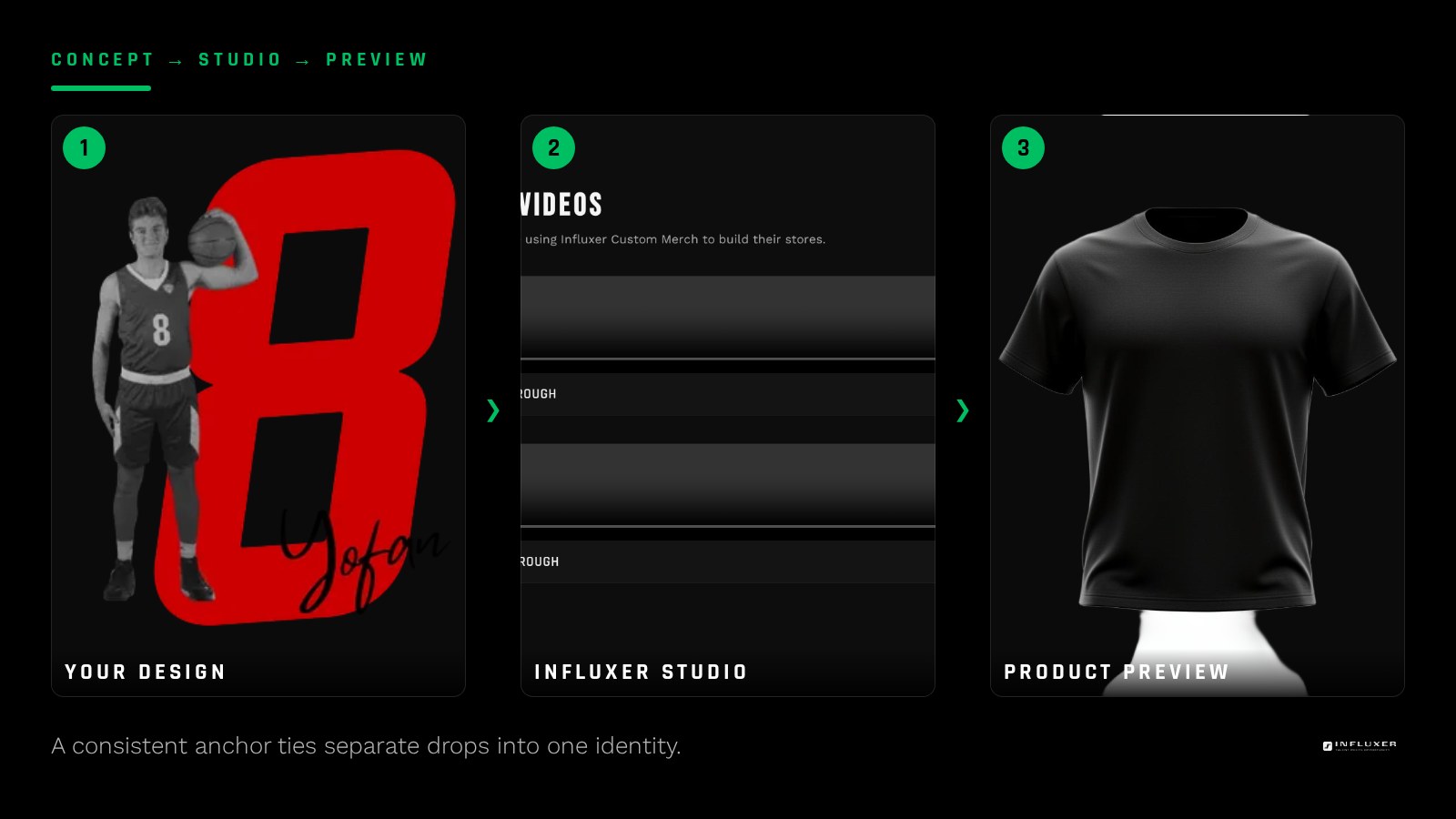
Across multiple drops, something should stay consistent so the merch reads as one identity rather than several unrelated purchases. That anchor could be a personal logo you upload every time, a consistent color palette, or a specific garment you always include. Pick one anchor rather than trying to keep everything identical, since some variation between drops keeps things from feeling repetitive.
- A personal logo or mark used across every drop, even as designs change.
- A consistent color palette, even if garments or graphics vary.
- A signature garment, like always including the same tee style.
- A consistent placement style, like always using a left-chest mark.
Mixing your own artwork with ready-made designs across the season
You do not have to commit to one path for every drop. A season-opening drop might work well as a ready-made design, since it needs to come together quickly and does not carry major meaning yet. A milestone drop later in the season might justify uploading your own, more considered artwork, since you have more lead time and more reason to make it specific to that moment.
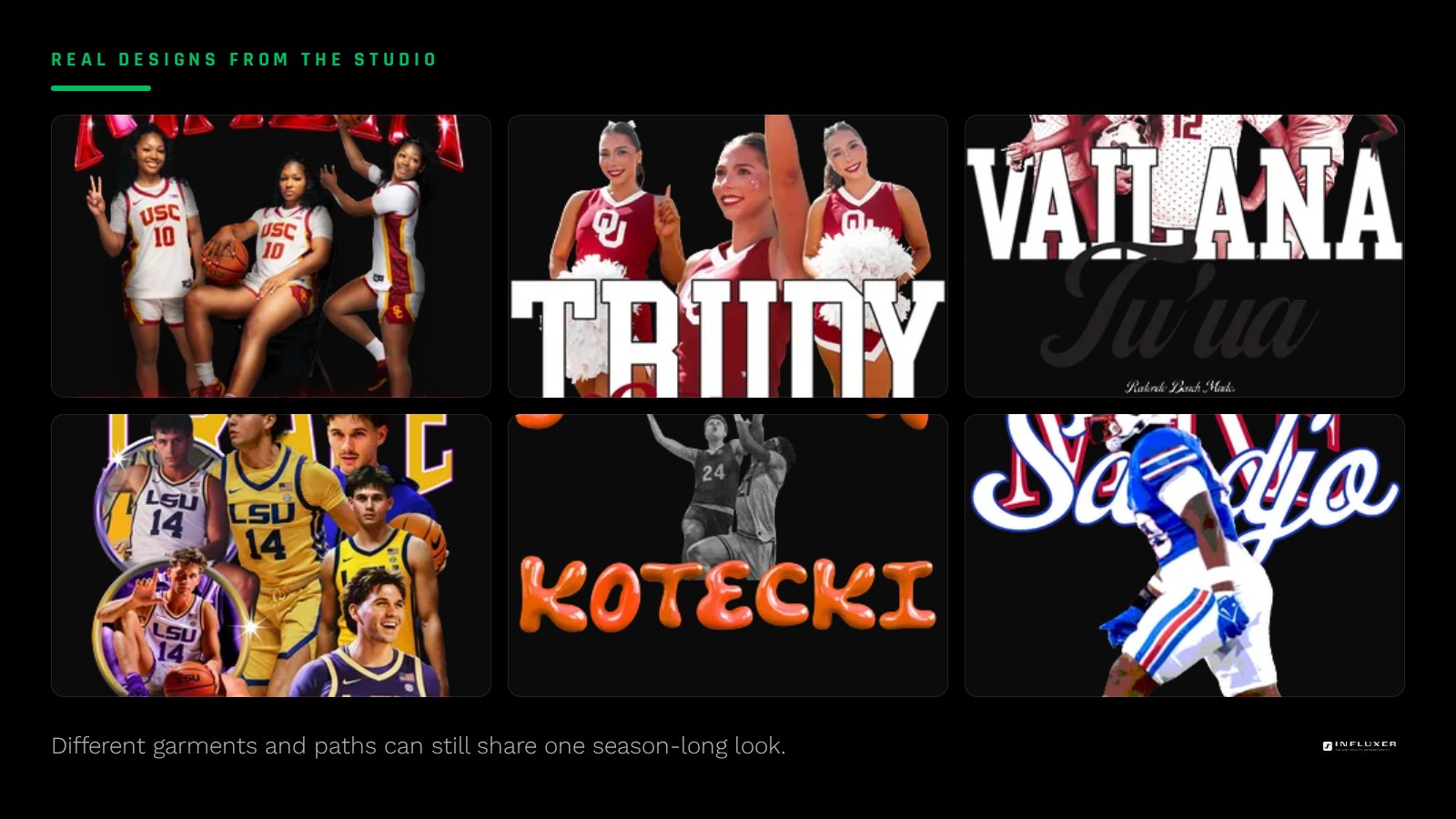
What matters is that whichever anchor you picked stays visible across both approaches, so a ready-made early drop and a custom late-season drop still feel like they belong to the same season, not two unrelated projects.
Garment and colorway planning across drops
Early in a season, simpler drops with one design and one or two garments keep things manageable while you learn what resonates. As the season goes on and you have a better read on what people actually want, expanding into a fuller collection or a milestone hoodie becomes a more informed decision rather than a guess.
Watch for seasonal fit too: a hoodie makes more sense later in a school year during colder months, while a tee works across more of the calendar and is a safer opening choice.
Spacing drops so each one gets attention
Drops that come too close together compete with each other for the same buyers' attention and budget. Spacing them around the natural moments you mapped earlier, rather than whenever a new design idea comes up, keeps each drop from cannibalizing the one before it.
Revisiting the plan as the season goes
Treat your season plan as a starting outline, not a fixed contract. If an early drop performs better or worse than expected, that is useful information for adjusting the next one, whether that means changing garments, adjusting your color approach, or shifting which design path you use next time.
It helps to write down, right after each drop closes, one or two quick notes on what you would change. Memory fades fast once the next drop is a month away, and a short note like "hoodie color ran too dark for the photos people posted" is far more useful when you sit down to plan the next round than trying to recall the details from scratch.
Keeping budget realistic across multiple drops
A season with three or four drops adds up differently than a single order, since you are effectively repeating setup costs and decision time each round. Keeping early drops to a single garment, like just the Comfort Colors 1717 tee, is a practical way to control cost while you are still learning what your audience actually wants before expanding into a tee-and-hoodie pairing later in the season.
It also helps to decide upfront whether each drop is self-funded by whoever is ordering, or centrally organized with one person collecting orders. Settling that once, before your first drop, avoids re-litigating the same logistics question every time a new drop comes up.
Plan your season's merch
- Map the natural moments in your season where a drop makes sense.
- Pick one consistency anchor, like a logo, palette, or garment, to carry across drops.
- Decide which drops call for a ready-made design and which call for your own artwork.
- Keep early drops simple: one design, one or two garments.
- Save fuller collections or hoodie-led drops for later, higher-meaning moments.
- Space drops out so each one gets full attention from your audience.
- Review how each drop performed before finalizing the plan for the next one.
Frequently asked questions
Do I need to use the same design path for every drop in a season?
No. It is reasonable to use a ready-made design for a quick early drop and your own artwork for a later, more considered one, as long as a consistent element like a logo or color palette ties them together.
How many drops should a season realistically include?
This depends on your season's natural moments rather than a fixed number. Two or three well-spaced drops tied to real occasions tend to work better than many drops with no clear reason behind their timing.
Should I plan the whole season before ordering anything?
A rough outline helps, but treating it as fixed is a mistake. Order your first drop, see how it lands, and use that to inform the next one rather than locking in every detail up front.
Start your merch — Plan your first drop of the season and build from there.
Watch a walkthrough — See how each studio step works before mapping out your season.