Help me choose
Tee, Hoodie, or Both? How to Decide
A tee and a hoodie are not interchangeable choices. Here is how price, season, and design size should actually drive which one you order.
By Influxer · Published 2026-08-16 · Updated 2026-08-16 · 4 min read
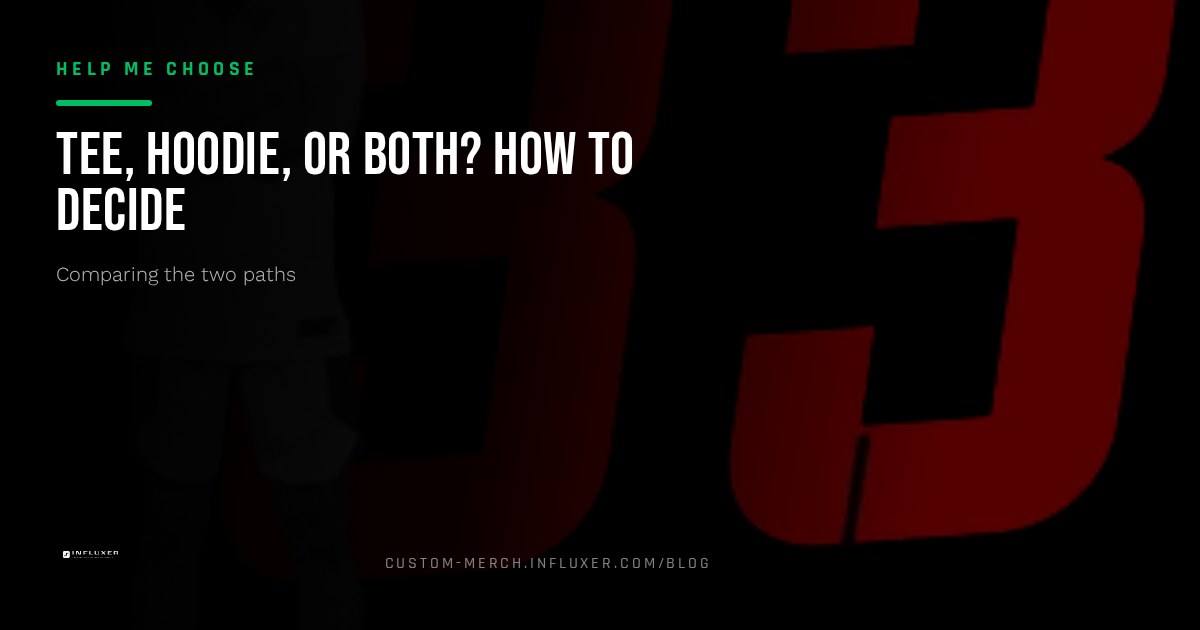
Once you have a design ready, the garment question comes up fast: order a tee, order a hoodie, or offer both. It is tempting to just pick both to be safe, but that is not automatically the right call, since it doubles the number of things you need to check, like color pairing and price point, without automatically doubling interest.
A tee and a hoodie serve different purposes even when they carry the exact same design. One is an everyday piece, the other reads more like an event or milestone item. Knowing which purpose you actually need solves most of this decision on its own.
Here is how to think through it based on what you are trying to accomplish, not just what feels like the default choice.
What a tee is actually good for
A tee, especially something like a Comfort Colors 1717 garment-dyed tee, is the lower-cost, higher-frequency option. It works across more of the year, it is easier for people to say yes to on impulse, and it gives your design more chances to actually be worn and seen since people reach for tees more often than hoodies.
The trade-off is less print real estate and a more casual overall feel. A design that relies on a large, detailed composition may not have room to fully land on a tee's chest print area the way it would on a hoodie front.
What a hoodie is actually good for
A hoodie, like the Independent Trading Co. SS4500 midweight pullover, carries more visual weight and more surface area. It reads as a bigger commitment, both in price and in how it feels to wear, which makes it a strong fit for milestone merch: senior year, a signing, a season closeout.
The trade-off is cost and seasonality. A hoodie is a harder impulse buy, and it does not get worn year-round the way a tee does in warmer months. If your audience skews toward casual, frequent buyers rather than one-time milestone purchases, a hoodie alone may underperform relative to a tee.
- Hoodie strength: bigger design canvas, feels like a bigger occasion.
- Hoodie weakness: higher price point, more seasonal, less frequent wear.
- Tee strength: lower price, worn more often, easier decision for buyers.
- Tee weakness: smaller print area, feels more everyday than special.
Why offering both is not automatically the safe choice
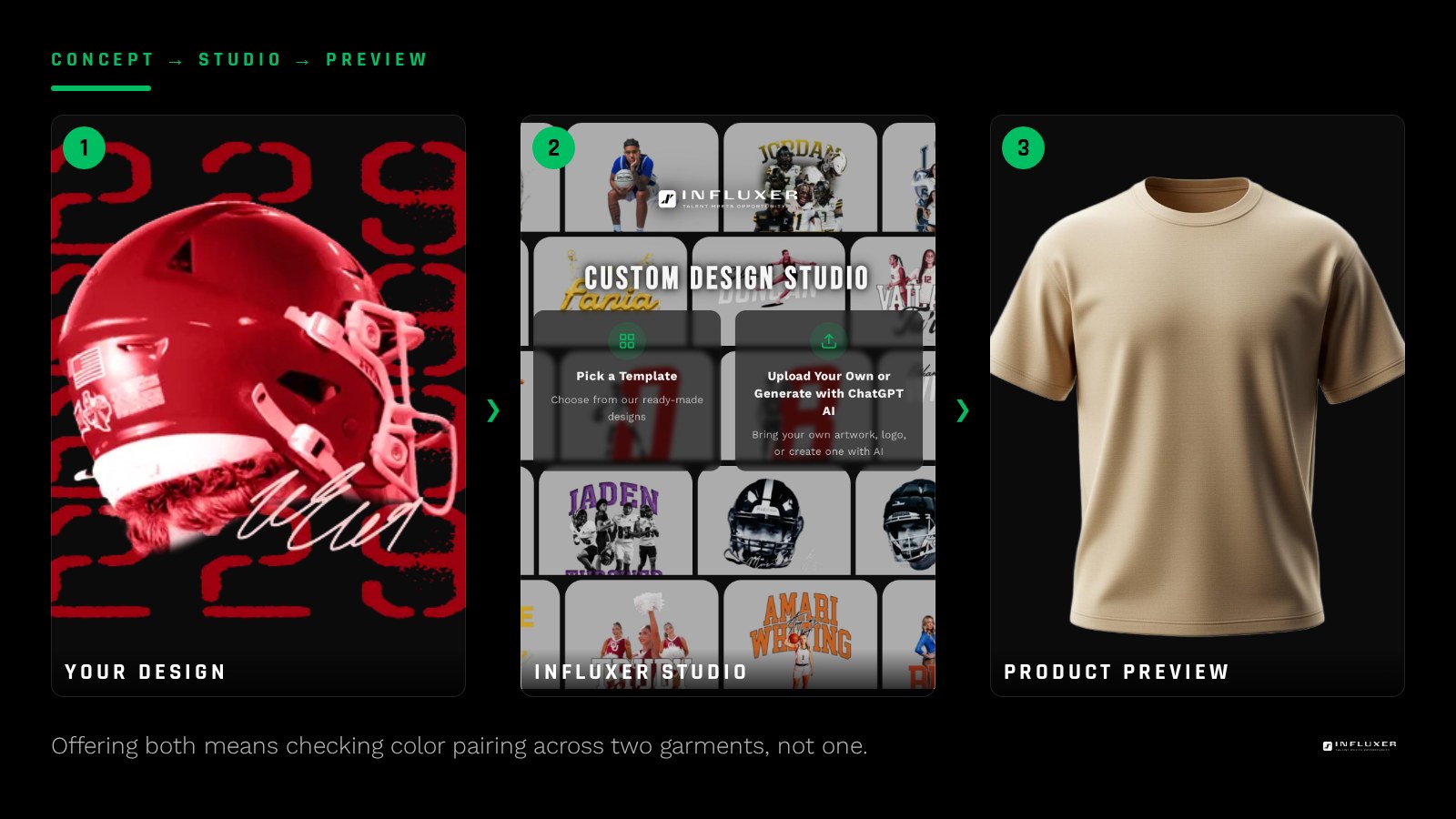
Offering both garments means your design needs to work at two very different scales and on two different color options, and it means you are checking placement and color pairing twice instead of once. If your design was built with only a tee in mind, dropping it onto a hoodie without reconsidering scale can leave it looking small and off-center rather than intentional.
Both is the right call when you genuinely expect demand for both, not simply because offering more options feels lower risk. More options without a clear reason for each one can dilute your drop rather than strengthen it.
Matching the garment to the occasion
A general drop meant to be worn casually, week to week, leans toward a tee. A milestone moment, like senior night or signing day, leans toward a hoodie, since people are more willing to spend more on something tied to a specific memory. A season-long store benefits from offering both, since it is serving different buying moments across a longer window rather than one single drop.
A simple way to decide if you are still unsure
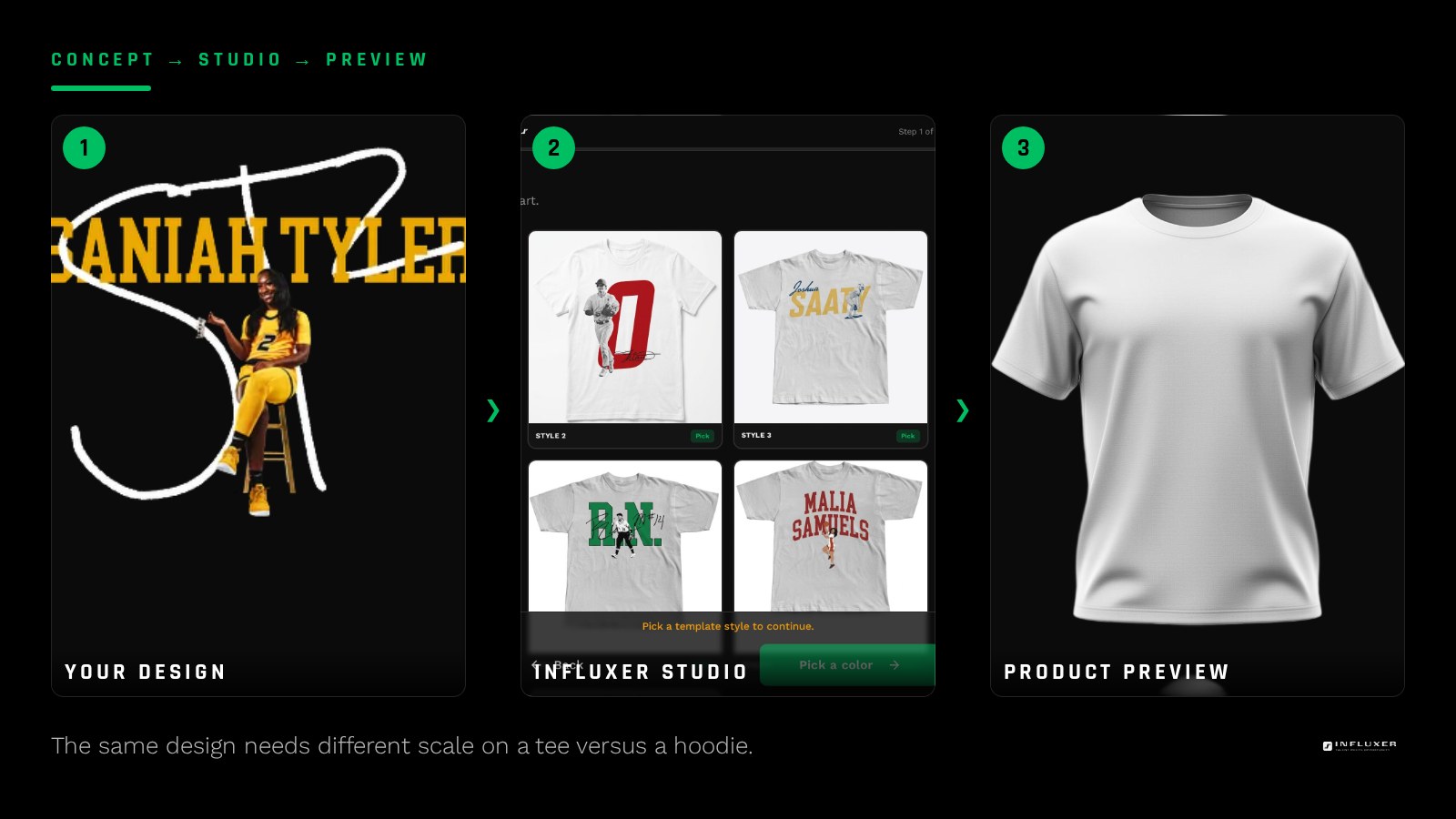
Preview your actual design on both mockups in the studio before deciding. If it looks equally strong and intentional on both, offering both is reasonable. If it clearly reads better on one than the other, that is a strong signal about which garment deserves your first order, with the other one saved for a future drop once you have seen how the first performs.
What color choice adds to the decision
The garment call also interacts with color. A tee in a lighter shade like Ivory reads casually and works well with a bold, single-color print, while a hoodie in something like Blue Spruce or Pepper carries a heavier, more finished look that suits a milestone drop. If your design depends on a specific ink-to-garment contrast, check that contrast on both the tee and hoodie color options you are actually considering, not just the design in isolation.
A mismatch here shows up fast: a design built around a light garment can look muddy on a dark hoodie if the ink colors were not chosen with that pairing in mind.
Decide your garment lineup
- Identify whether this drop is everyday casual or tied to a specific milestone.
- Check your design's scale against both the tee and hoodie print areas.
- Preview the design on both garment mockups before finalizing.
- Consider your buyers' likely price sensitivity for a hoodie versus a tee.
- Decide if this is a single drop or part of a longer season-long store.
- If choosing both, confirm color pairing works across both garments.
Frequently asked questions
Is it ever a mistake to offer only a hoodie?
It can be, if your audience is price-sensitive or the drop is meant to be everyday rather than a milestone item. A hoodie-only drop works best when the occasion clearly justifies the higher price and heavier commitment.
Should the design be different between the tee and the hoodie?
It does not have to be, but the scale and placement should be reconsidered for each garment rather than assumed to transfer directly, since the print area and overall proportions differ.
Can I start with one garment and add the other later?
Yes. Starting with a tee and adding a hoodie in a future drop, or the reverse, is a reasonable way to test demand before committing budget and design work to both at once.
Start your merch — Preview your design on both the tee and hoodie before you decide.
Browse ready-made designs — See layouts already tested on both garments.