Help me choose
How College Athletes Use Merchandise to Connect With Fans
How merchandise gives college athletes a way to build an identity fans recognize, beyond the games they play.
By Influxer · Published 2026-08-16 · Updated 2026-08-16 · 5 min read
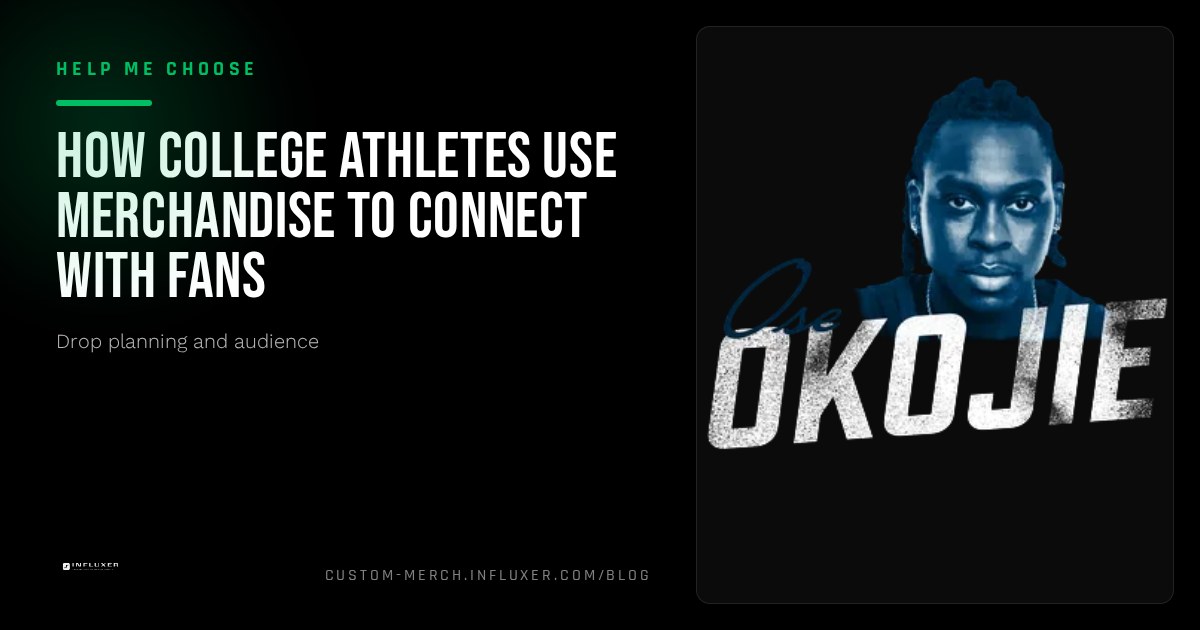
A college athlete is already visible: games are posted, highlights get shared, and a following builds around performance. Merchandise gives that visibility a physical shape. A shirt someone chooses to wear says something a highlight clip cannot: this person actively supports what you are building, not just what happened on a Saturday.
The athletes who do this well are not treating merch as a side project bolted onto their season. They are treating it as another channel for the same identity they already show on the field and on social media, told through a design instead of a post.
This is a look at how that identity actually gets built through merch: the choices that make a design feel like it belongs to one specific person, and the habits that keep fans paying attention after the first order.
Merch is an identity, not a souvenir
A generic shirt with a school name on it is a souvenir. A shirt built around your number, your name, or a phrase people already associate with you is an identity piece. The difference is specificity: fans are not buying a reminder that they watched a game, they are buying something that represents a person they follow.
That means the design choices matter more than the product choices. A wordmark using your name, a monogram from your initials, or a mark built around your jersey number all give fans something to recognize instantly, the same way a logo works for a brand.
Consistency is what makes it recognizable
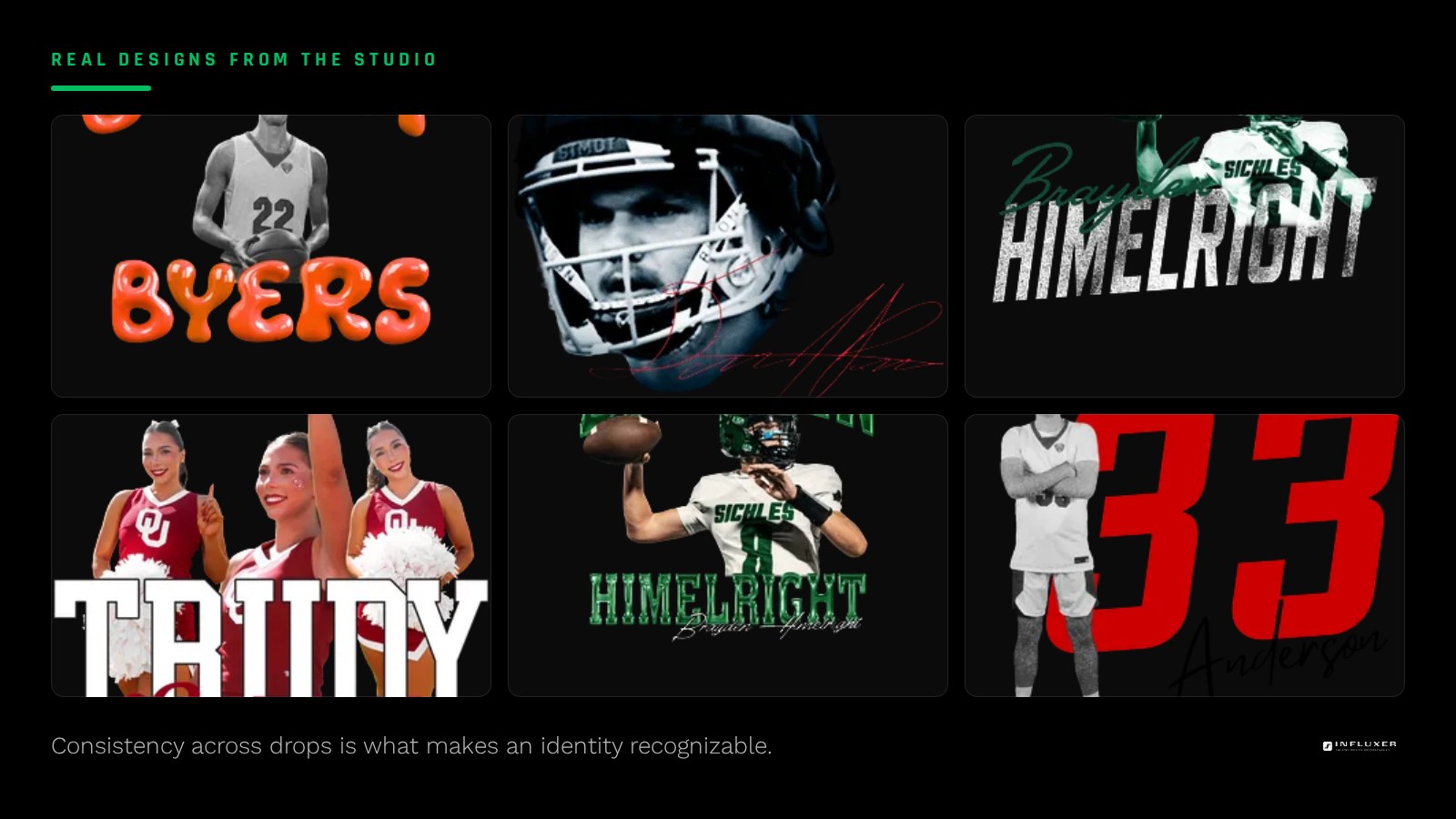
One well-designed shirt can look good. A recognizable identity comes from using the same fonts, colors, and marks across everything you put out, so a fan who has seen one design of yours recognizes the next one without needing your name on it.
This does not mean every drop has to look identical. It means picking a visual language once — a font pairing, a color story, a way your number or name is treated — and returning to it deliberately rather than starting from scratch every time.
Fans respond to real moments, not perfection
The photos and context around a design tend to matter as much as the design itself. A photo of you actually wearing the merch, taken in a real setting rather than a stock-style studio shot, tells fans this is genuinely yours and not a generic product.
You do not need a professional shoot for this. A candid photo in your own gear, in a place that means something to you, communicates authenticity in a way a posed studio shot rarely does.
Timing merch around moments that already have attention
Fans are more likely to notice a new piece of merch when it lines up with something already happening: a season starting, a milestone, senior year, or a personal story you have been telling online. Merch on its own, with no context, competes for attention against everything else in a feed.
Tying a design to a moment gives fans a reason to care right now, not just eventually. It also gives you something specific to say about the design when you share it, instead of a generic announcement.
The design should hold up away from the game
A design that only makes sense in the context of a specific game or season has a short shelf life. A design built around a lasting part of your identity, like your number, your initials, or a phrase people associate with you, keeps working long after a single event passes.
This is why so many athlete marks lean on things that will not change: a name, a number, a hometown, rather than a specific score or date. Those elements travel with you across seasons instead of becoming dated.
Involving people close to you widens who cares
Family, teammates, and close friends are often the first people to wear a new design and the most likely to talk about it honestly with others. Letting them see a design before it is available, and giving them an easy way to get one, turns a small group into visible support that other fans notice.
This works because people trust what they see other real people wearing more than they trust an announcement. A teammate or sibling wearing your design in public does more for recognition than another post about it.
Where a studio like Influxer fits in
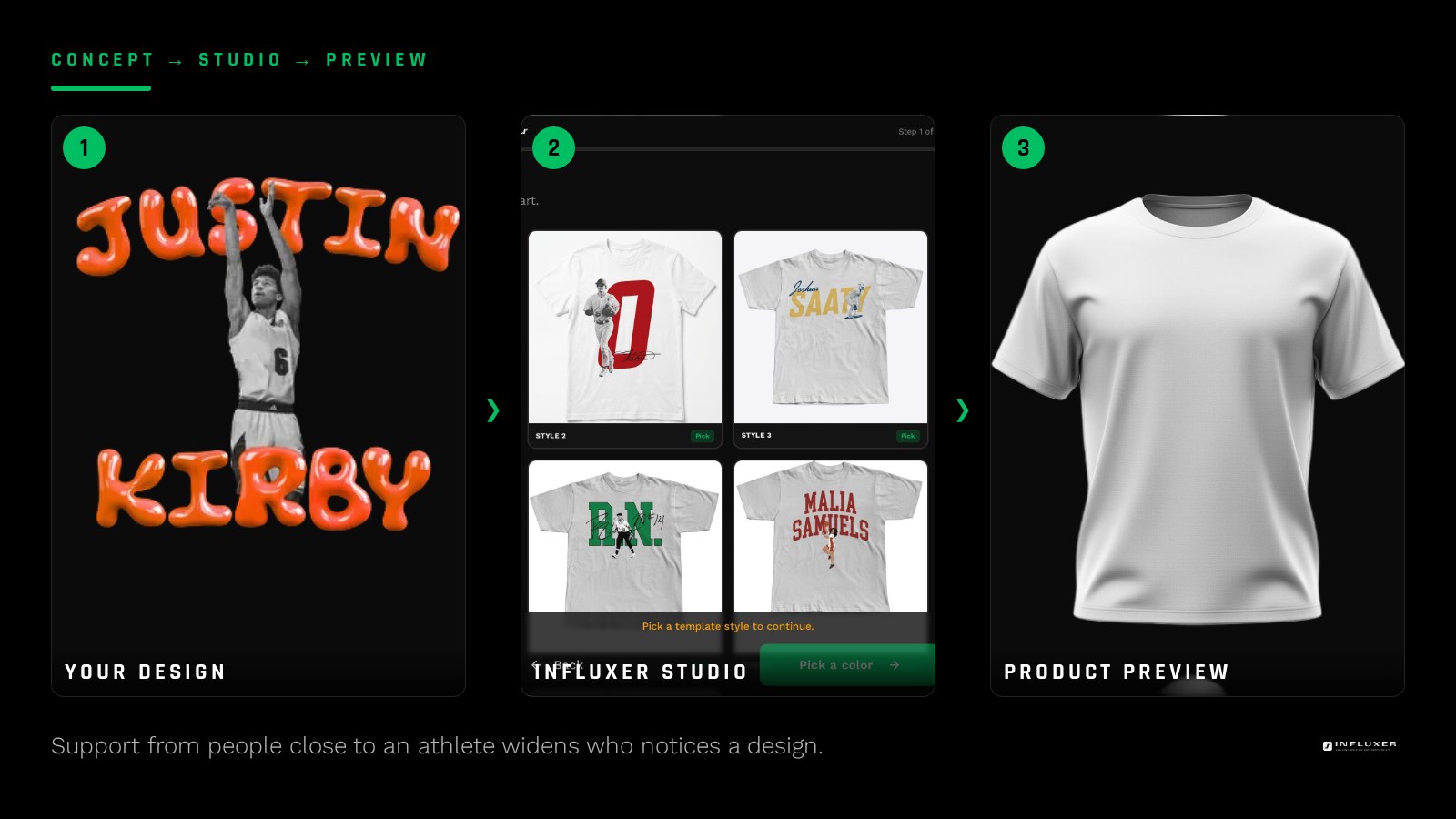
Turning any of this into an actual product is the part that used to require a separate designer or printer relationship. The Influxer studio lets you build a design around your own name, number, or artwork and preview it on real garments before committing, so the identity you have in your head is something you can actually check before it becomes a shirt someone wears.
Whether you already have artwork or are starting from a ready-made layout, the goal is the same: a design specific enough that a fan recognizes it as yours the moment they see it.
Building an identity through merch
- Base your design around something lasting: your name, number, or initials, not a one-time event.
- Pick a font and color story once, then reuse it across future designs.
- Take at least one real photo of yourself wearing the design in a genuine setting.
- Time a new design around a moment that already has attention, like a season or milestone.
- Share a preview with family and teammates before opening orders more widely.
- Keep the design specific enough that it would not make sense for a random other person.
Frequently asked questions
Does a college athlete need a professional designer to build a merch identity?
No. Many athletes start from their own artwork or a ready-made layout and adjust it around their name, number, or initials. What matters more than professional design work is consistency across whatever you put out.
How do I make my merch look different from generic school gear?
Build the design around something specific to you rather than a school name or logo alone. A personal wordmark, number, or phrase fans already associate with you separates your merch from a general souvenir shirt.
Should every design I make look the same?
Not identical, but consistent. Reusing the same fonts, colors, or a signature mark across different designs helps fans recognize new pieces as yours without needing to be told.
What role do photos play in how fans respond to merch?
A real photo of you wearing the design, taken somewhere genuine, tends to land better than a studio-only mockup. It signals the merch is authentically tied to you rather than a generic product.
Start building your identity — Compare paths and find the one that fits how you want to show up.
See ready-made layouts — Start from a proven layout and adjust it around your own identity.