Design it for me
Track and Cross Country Merch Designs That Read at a Glance
Track and cross country merch runs on events and mileage, not jersey numbers. Here is how to pick a layout that fits.
By Influxer · Published 2026-08-16 · Updated 2026-08-16 · 4 min read
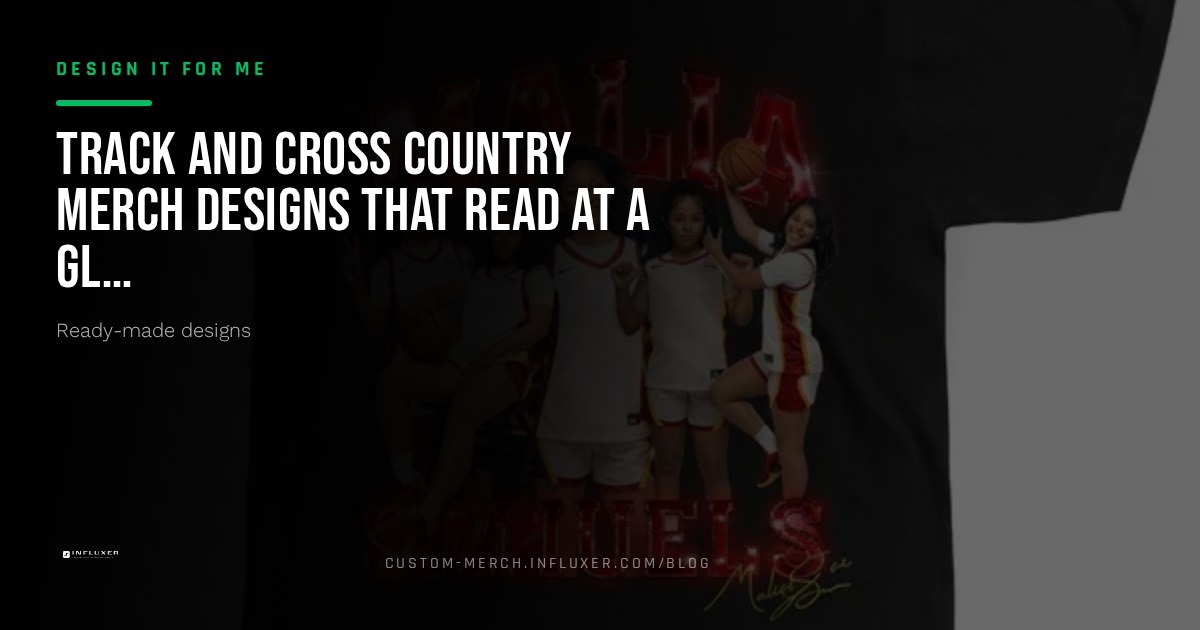
Track and cross country do not have jersey numbers in the way team sports do, so the merch built for them leans on different information: an event, a distance, a personal best, or simply the team name and a strong graphic. A template built for football or basketball misses this entirely.
These sports also cover a wide range of specialties under one program, from sprinters to distance runners to throwers and jumpers, which means a lot of track and cross country merch is designed to represent the whole team rather than one athlete's specific event.
Here is how to pick a ready-made layout that actually fits the sport, whether you are ordering for yourself or for a full team.
Event-based layouts instead of numbers
Some track templates include a spot for an event, like 800M, 5K, or Hurdles, in place of the jersey number field you would see in a team-sport layout. This works well for a personal tee that reflects your specialty, especially if you compete in one event primarily.
If you compete across multiple events, or if the shirt is meant to represent the team rather than your individual specialty, skip the event field and choose a team-name-forward layout instead.
Cross country's distance-and-mileage culture
Cross country has a strong culture of shirts that reference distance, mileage, or the demands of the sport, more than most other sports lean into that kind of detail. If a template offers a line for that kind of phrasing, it fits cross country well; the same line would feel out of place on most track or field event templates.
Cross country courses and terrain also vary a lot by region, so a design that references your specific course or conditions can feel more genuine than a generic distance reference, if a template gives you room to customize that text.
- Event-based layout: best for one athlete's specific specialty.
- Team-name-forward layout: best for a shared team order across specialties.
- Distance or mileage phrasing: fits cross country more than most track events.
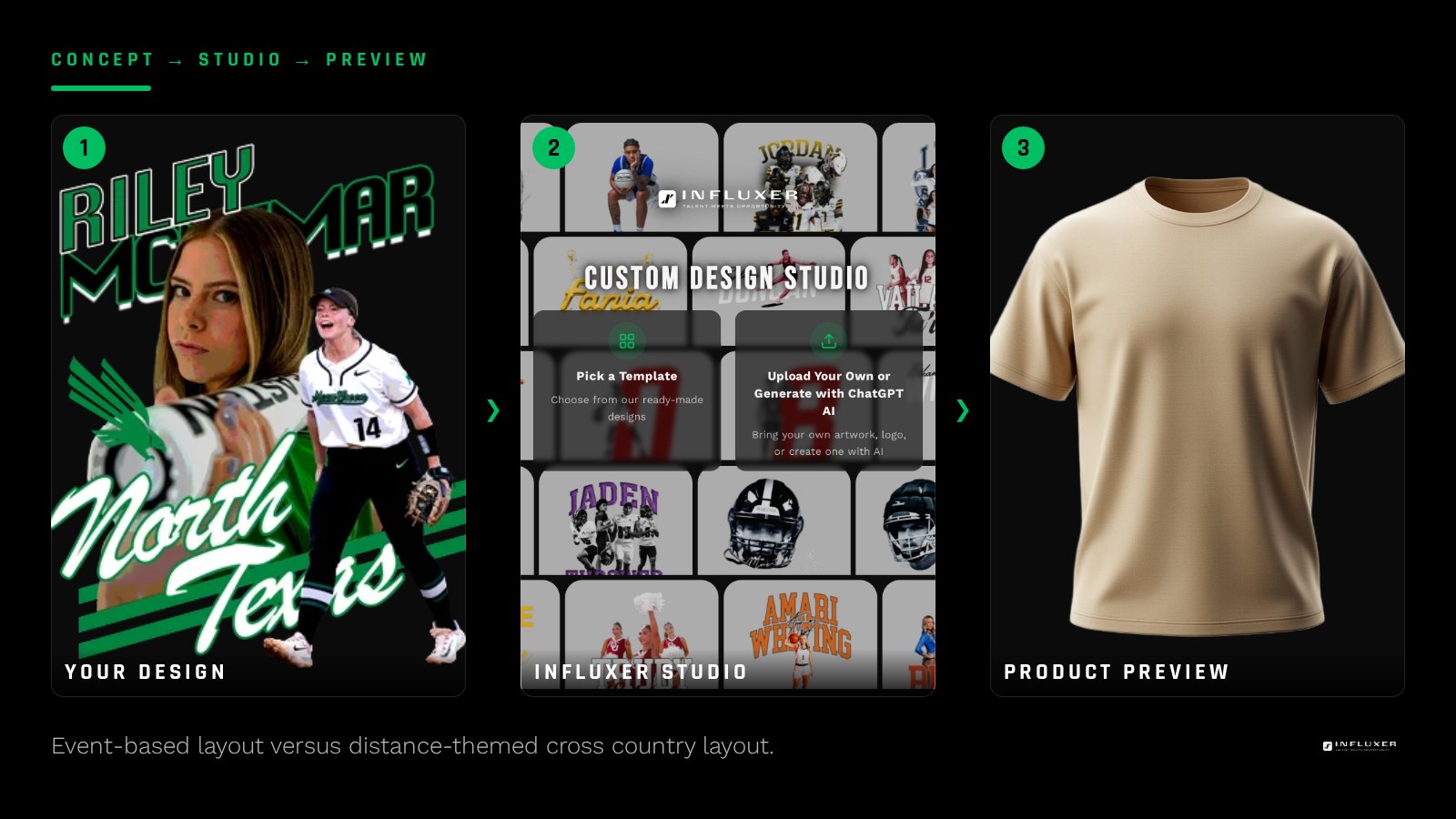
What reads at a glance during a meet
Track and field meets and cross country races are spread out over a large area, often outdoors, which means a fan or parent tee needs to read from further away than an indoor sport shirt typically does. Favor bold, high-contrast type over a detailed or busy graphic if the shirt is meant to be worn and recognized across a big open venue.
A team name in a strong, simple typeface reads more reliably at a meet than an event-specific design, which is one reason most fan-facing track and cross country merch leans team-first rather than individual-first.
Colors and outdoor visibility
These sports compete outdoors in a wide range of light, from early morning meets to bright midday heat, which makes color contrast worth extra attention. A dark design on a light garment, or the reverse, tends to hold up better across changing outdoor light than a mid-tone-on-mid-tone combination that can wash out in direct sun.
Comfort Colors 1717 in a bright shade like Neon Cantaloupe or Flo Blue photographs well for team spirit shots at outdoor meets, though a more neutral option like Sandstone or Ivory holds up better as an everyday training shirt.
Layering for early morning and cold-season meets
Track and cross country seasons both include early morning meets and, depending on region, cold-weather racing, which makes a matching SS4500 hoodie a practical companion piece rather than just a style add-on. As with any layout, check that a low, centered team wordmark on the tee version does not conflict with the hoodie's front pocket before ordering both.
Personal record and season-summary pieces
Some athletes and teams like a design built around a season's worth of personal records or key meet results. This works well as a one-off piece for a specific athlete at the end of a season, but it is not the right layout for a shared team order meant to represent the whole roster. Keep those two use cases in separate templates rather than trying to combine them.
Choosing a track or cross country template
- Decide if the design is for one athlete's event or the whole team.
- Use an event field only if you compete primarily in one specialty.
- Consider distance or mileage phrasing for cross country specifically.
- Favor bold, high-contrast type for a fan tee meant to read across an outdoor venue.
- Choose garment color based on outdoor light conditions, not just team color.
- Check hoodie placement clears the SS4500 pocket seam for cold-season meets.
Frequently asked questions
Do track and cross country templates use jersey numbers?
Not usually. Since neither sport centers on a jersey number the way team sports do, templates for these sports more often use an event, a distance, or the team name as the main focal element instead.
What is the difference between a track template and a cross country template?
Track templates are more likely to reference a specific event like 800M or Hurdles, while cross country templates lean into distance and mileage themes more heavily. Both can also use a straightforward team-name-forward layout.
What colors work best for outdoor meet merch?
High-contrast combinations, like a dark design on a light garment or the reverse, hold up better across changing outdoor light than mid-tone-on-mid-tone pairings, which can wash out in bright sun.
Should I order a hoodie for track or cross country season?
It is a practical choice given how many meets happen in early morning or cold conditions. A matching SS4500 hoodie in the same design as your tee covers both warm and cold meet days.
Browse track and cross country templates — Start from an event-based or team-name-forward layout built for these sports.
Compare all design paths — See if a template or a custom upload is better for your team.